
‘Charming colonial town’ is a phrase that perhaps gets overused when referring to Colombia’s old towns and traditional villages. But this is because there are so many of them. Delightful cobbled streets, colourful balconies, the main square dominated by an imposing church, old men in hats passing the time chatting on a bench, buildings which ooze history. Sound familiar? Well yes, this could pretty much describe any Colombian colonial town, yet each one has its own charm, its own magic and often its own local delicacy or handicraft that gives it its own character.
On our recent trip to Antioquia, we got to pass through several of these towns, towns which at the same time are so familiar and so new, so similar yet so individual, each with its own story, which the townsfolk were all too keen to share with us.

After arriving in Medellin’s Rionegro airport, we were immediately whisked away to Santa Elena. This place is not your average Colombian town though. In fact, instead of being known as a ´municipio’, it is a ‘corregimiento’, which means that the rural population is larger than the urban population. As a result, Santa Elena’s town centre is much less developed than in most Colombian towns, while the majority of the action takes place in the nearby farms and fincas.
The details are perhaps best saved for another post, but Santa Elena is the home of the silleteros, who carry the massive flower displays during Medellin’s Feria de Las Flores. In fact, the only people who are allowed to participate in the parade are specific families from Santa Elena. All 420 silleteros are Santa Elena residents and this is where the displays get arranged, with each family working on a number of stunning designs. The fields around Santa Elena are alive with colour, hundreds of varieties of flowers turning green hills into veritable and kaleidoscopic paint palettes.
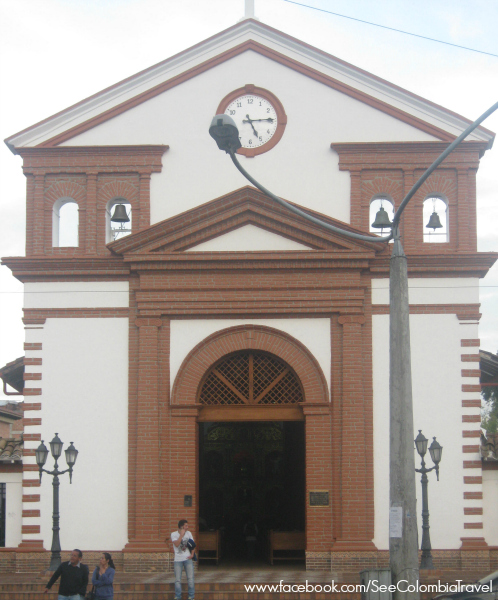
Marinilla, just outside Medellin, is about as Colombian as you can get – its narrow streets full of life, the cattle crazing just outside the town, people chatting on their doorsteps and the delicious aroma of local street food wafting through the air. Tomorrow we will delve deeper into the fascinating culture and history of the town, known as the ‘Sparta of Colombia’ apparently (thanks to the number of famous soldiers and revolutionary generals involved in Colombia’s fight for independence that hailed from Marinilla’s humble streets). Suffice to say that, if Marinilla’s walls could talk, not only would it be one of the most visited tourist destinations in the world, but they would also have centuries of intrigue and history to share with us.
Not far from Marinilla is the small town of San Antonio de Pereira. A fairly unremarkable town, you might
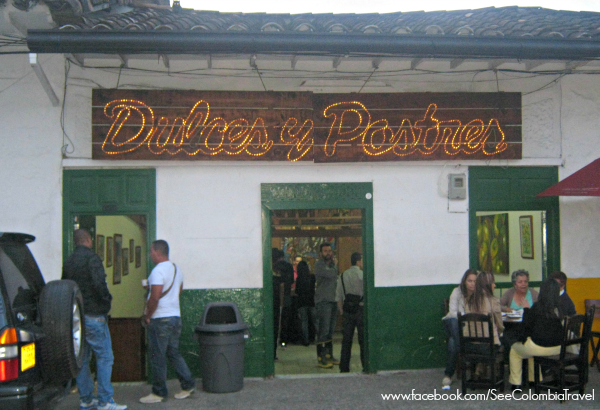
easily pass through it without a second glance. But that would deny you the opportunity to sample some of the tastiest desserts anywhere in Colombia. Head to ‘Dulces y Postres’ in the town’s main square, grab a little spoon, try each and every one of the mind-blowing desserts and then settle on one to fill your belly. San Antonio is also the home of Colombia’s National Empanada Festival, so this is clearly the place to be if you want to indulge yourself.
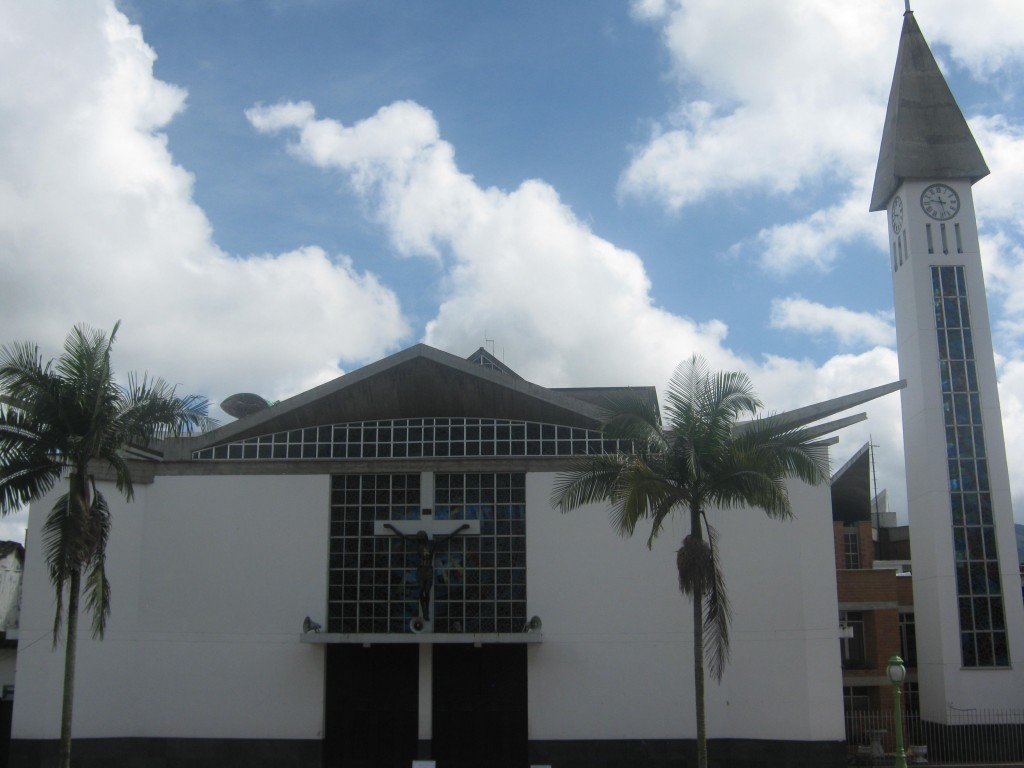
Our trip also took us to Carmen de Viboral, a quite distinctive Colombian town and birthplace of Colombia’s famous poet, Jose Manuel Arango. Friday will see us focus on the town’s reputation as the centre for Colombia’s ceramics industry, but a curious feature of the town is its church. In 1962, an earthquake destroyed the old church and a new one was built three years later in a style that, while contrasting starkly with the town’s colonial feel, gives it a thoroughly unique look. The ‘Ceramics Street’, with its mosaic facades and colourfully designed plates only adds to the singular character of Carmen de Viboral.
Each town we visited offered us a different insight into the local history, economy and culture, and highlighted the stunningly varied nature of Antioquia’s offerings. Sure, Colombian colonial towns might be designed following the same blueprint, they might be architecturally very similar, but lumping them together in one category denies them their special characteristics, specific local traditions and peculiar nuances. Whether it’s the colourful facades of Guatape (again, a post for another day) or the famed guitar factory of Marinilla, there are no two towns the same in Colombia, whatever you may have been led to believe.



Pingback: See Colombia Travel's 2013 Year Review | Colombia Travel Blog by Marcela & See Colombia Travel
Pingback: Antioquia Week: Colombian Handicrafts | Colombia Travel Blog by Marcela & See Colombia Travel
Pingback: Antioquia Week: The Most Colombian Town in South America? | Colombia Travel Blog by Marcela & See Colombia Travel