How many people can just hop on over to Colombia’s Pacific coast when they have a few days off for Easter? Well, mainly people in Colombia and luckily for me I am one of them. I’m not showing off (well, maybe a little), but merely highlighting the amazing diversity and opportunity for travel that living in Bogota offers.
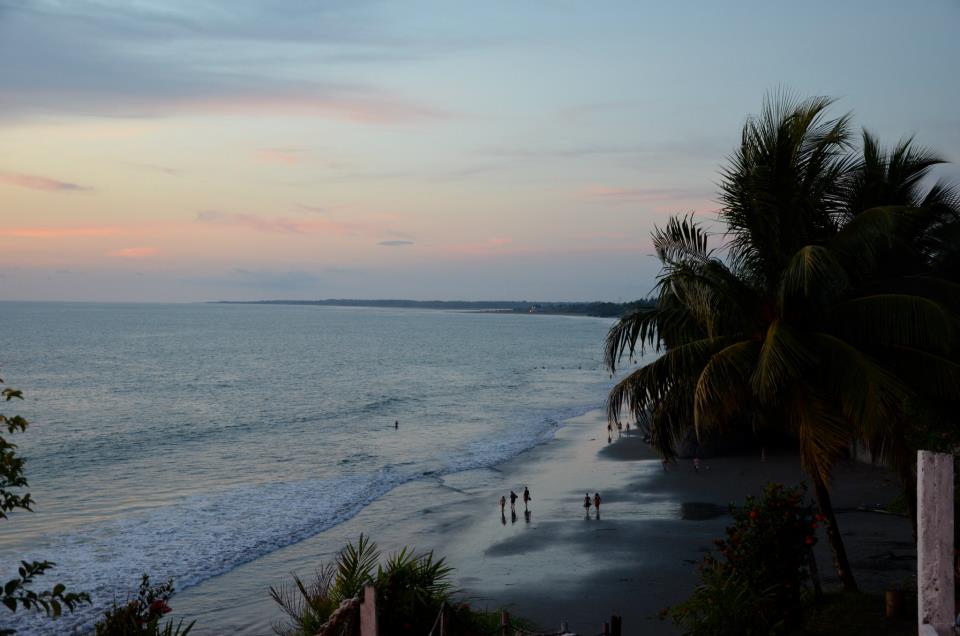
Earlier this year I (and about 10,000 of my closest friends) made my way to the Pacific for Easter. Flying into Buenaventura I caught my first glimpse of just how much this part of Colombia differed from the rest and especially Bogotá. Thick jungle dominated the landscape, so much so that it was almost impossible to see where the airport was. No surprise, given that the small runway appeared out of nowhere amidst the tropical rainforest. The airport was nothing more than a tiny room with a fridge. I was reminded of the airport in Leticia, in Colombia’s Amazon, which was a surprise to me, given the relative size of Buenaventura.
As we drove to the port, I was struck by a city that has experienced a long and harsh decline; its dilapidated, once-grand architecture standing alongside tin-roof shacks were a stark reminder of its former glory that has all but vanished. For here in Buenaventura, Colombia’s internal battle still rages, a fact that might elude those of us living in the big cities. The poverty is overwhelming and most Bogotanos who visit are truly shocked by the level of deprivation.
Yet, despite all this, Buenaventura is a city with plenty to offer. As the main gateway to Colombia’s Pacific coast, there is little doubt that the city will see improvements in the near future, with increased investment and tourism leading to greater interest from the political classes. In the past, Buenaventura has largely been ignored by the authorities in Bogota, but now they have no choice but to pay it some much needed attention.
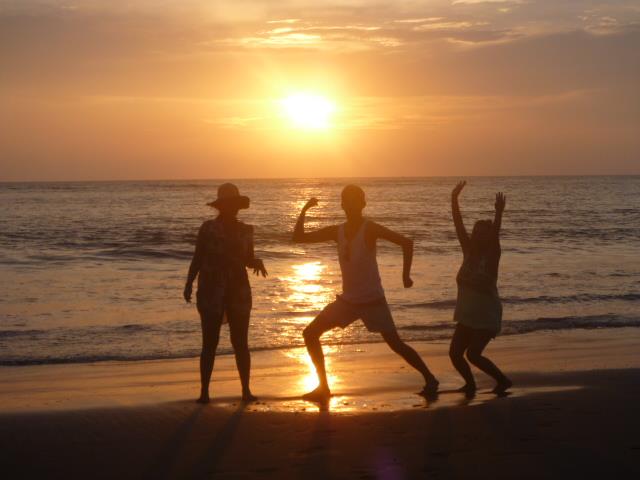
Upon arrival at the port, we took an intensely choppy and stomach-churning boat to Juanchaco and from there it is either another short boat ride or a motorbike journey to La Barra. The tiny village (whose population doubled with the arrival of a bunch of rowdy Bogotanos) is made up of a couple of cabañas and some shacks serving up fried fish, rice and plantains. All the time.
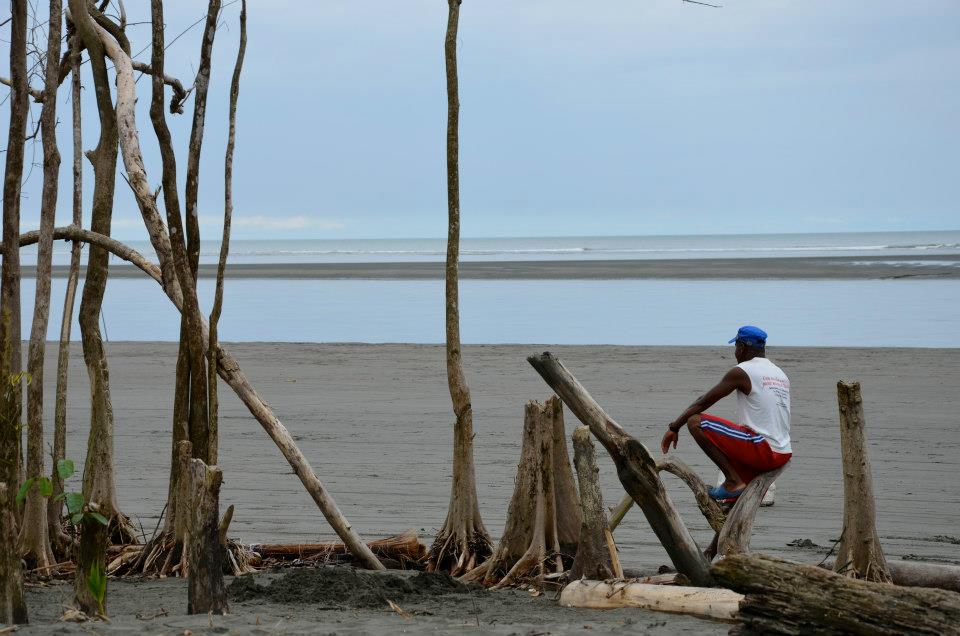
With regards the beach, don’t expect the picturesque golden sands and crystal clear waters of the Caribbean coast. No, here you will find a totally different kind of beauty, raw and savage, with the jungle nonchalantly cascading down to the debris-strewn black sands and slightly murky waters. Perhaps I’m not painting too pretty a picture. For me, this beats the beaches of Tayrona and Santa Marta – untamed nature at its best. When the burning rays of the sun smack your face and you stare for miles down a deserted, wild beach with a bottle of the coast’s finest viche (amazingly, there is a drink that is worse than aguardiente) there is little that can bring you down.
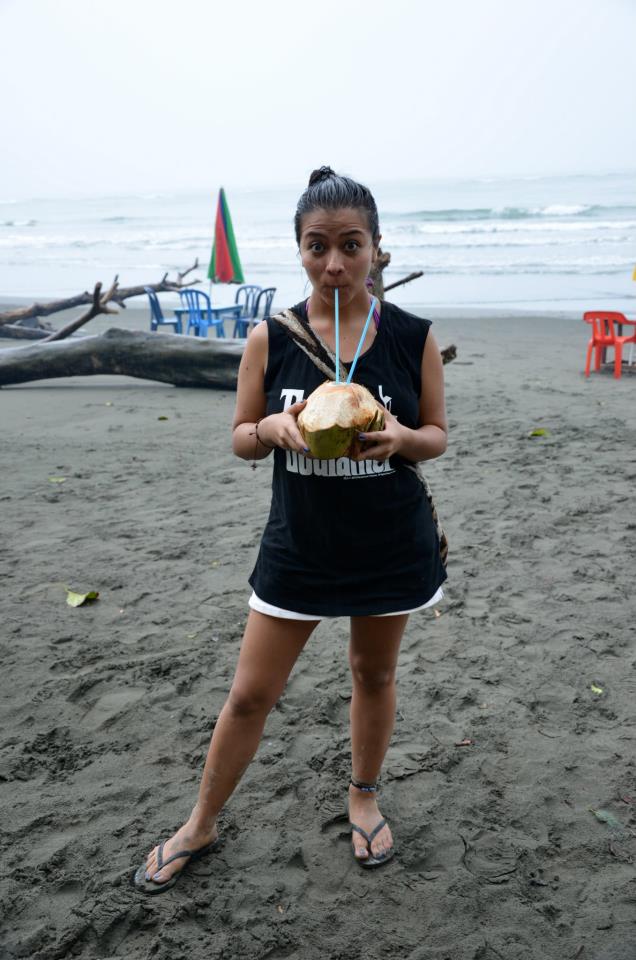
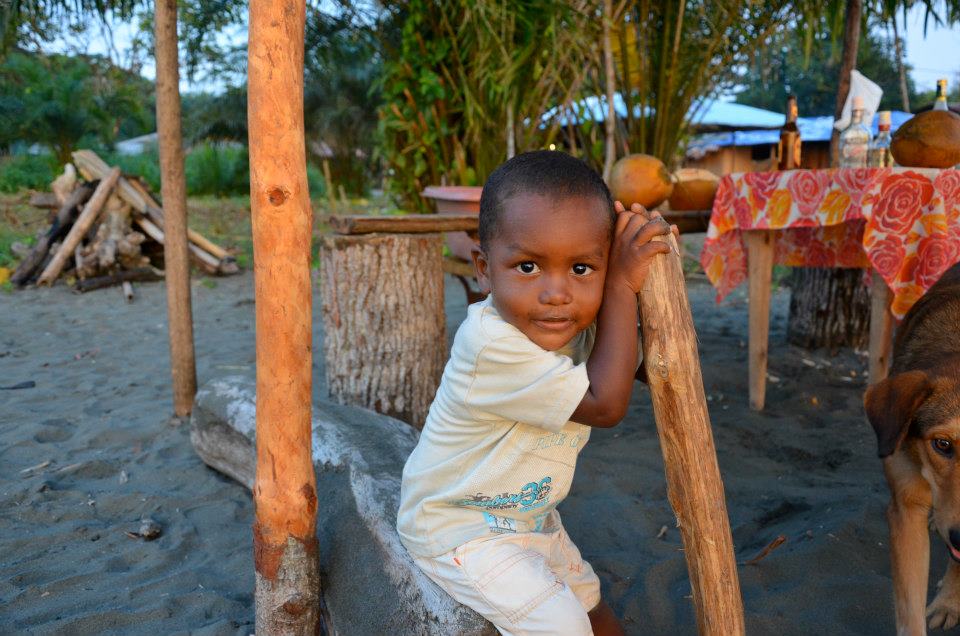
There is absolutely nothing to do here. Days are spent swimming, drinking, playing football and ignoring the fact that you haven’t washed for a week. A short boat ride from the ‘town’ is a small waterfall with a freshwater pool but apart from that you have to create your own entertainment. Not really a chore to be honest and if you get bored you can just summon some of the local children who will be more than happy to cheat while you play cards with them.
Amazingly, La Barra has its own ‘club’. A room. Due to the heat, people choose to dance outside. As a foreigner who is yet to master any kind of Colombian dance (and who is unlikely ever to do so), there is little more emasculating than walking into a group of massive, built costeños with their shirts off who immediately proceed to steal all the women that you thought you had arrived with. So while the ladies cut some (mind-blowing) shapes with a variety of Pacific adonises, most of the lads opted for a cheeky arepa and a slight wiggle of our basically motionless hips.
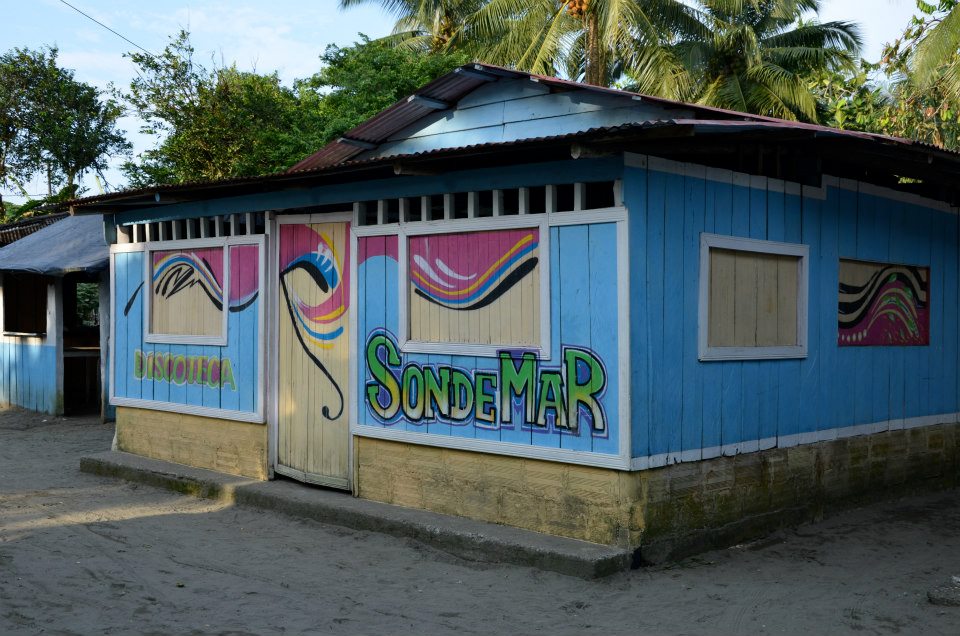
Given the immense beauty of this part of Colombia and the relative lack of tourism, this is a truly mind-blowing place for a getaway. I have no doubt that the coming years will see an influx of visitors and an improvement of the infrastructure, but I would suggest going now to experience the Pacific as it should be – remote, scenic and fascinating.
Related Posts
 Guía práctica para viajar a Capurganá y Sapzurro (Update 2021-2022)
 Las 8 mejores islas de Colombia
 Practical guide to travel to Capurganá and Sapzurro (Update 2020-2021)
 Eje cafetero de Colombia: 5 razones por las que tienes que visitar Buenavista y Pijao.
 8 Experiencias increíbles que solo puedes tener en el Caquetá

Pingback: Azzam's Greatest Colombian Moment | Colombia Travel Blog by Marcela & See Colombia Travel
Pingback: Mi Mejor Momento en Colombia: Azzam | Colombia Travel Blog by Marcela & See Colombia Travel