
Well, we have talked about it before. Colombia is a country that completely worships cheeses. Whether it be with guava paste, hot chocolate, fruit salad, or – heaven forbid! – hot dogs or sandwiches, nary an opportunity is lost to add a bit of fermented curd to the mix.
Well you might say, then, Gentle Reader, “so what? Cheese is amazing.” I will cede you that point, my confident cheese-o-phile, on most occasions.
There is, however, something I’m still not prepared to cede. At the very real risk of offending the many Colombians among you, I’m afraid my conscience demands that I admit something.
Colombian cheese often leaves me… well… kind of … meh.
There is nothing I love more than a good wine accompanied by a complicated and varied cheese board, replete with deliciously gooey camembert; tooth-hurtingly good brie; a brisk, sharp extra-tasty cheddar, almost too-intense blue vein; hell, even some Czechoslavakian sheep’s milk cheese would get me going. This is why it pains me to say, Gentle Cheese Lover, that, speaking very generally, I don’t find Colombian cheese very tasty.
Before I get booted out of my beloved adopted country for taking such an unpopular and unpatriotic stance, let me just say that I do like at least one type of cheese. This brings me to…
The Good
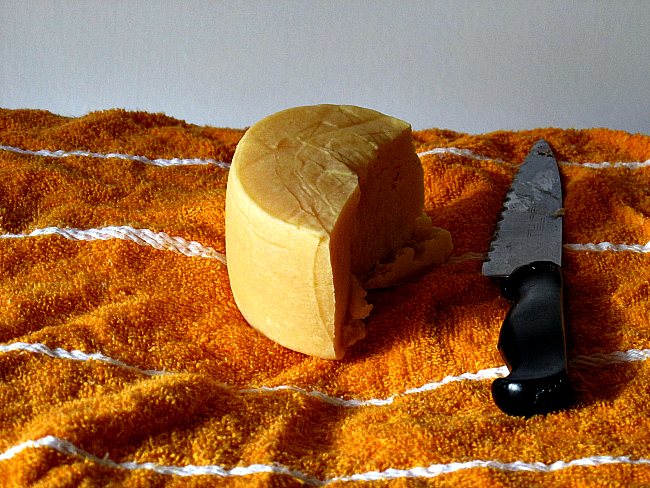
Paipa is one of those towns that helped me fall in love with Boyaca. There are many reasons for this, one being the local product that Paipa-ians are understandably proud of. Paipa cheese is made by masters of the cheese craft. It’s full-bodied, rich and sharp, and just becomes even more magic when heated. Whilst in the slightly chilly but warm-hearted Paipa, I had the best bueñolos I’ve ever had, so good, because they heavily featured this gloriously mature (keep it wrapped up in cloth in a cupboard, not in the fridge), flavourful cheese. Paipa, we salute you and your devotion to the Cheese Art. I’m told the otherworldly La Guajira is home to a variety of cheese rivalling Paipa’s for its right royal flavour kick, but I personally haven’t been lucky enough to try this claim out for myself. If anyone has any lying around, I’m more than happy to give it a go, though.
The Bad

Well, really, I’d struggle to find much Colombian cheese itself that has enough character to be definitively bad. We’ll discuss this more in the next category. However, there is something I’d say, from my perspective and with my gringo palate, is definitively bad – at least for me. And that is this Colombian obsession with combining sweet things with perfectly inoffensive cheese. Hear me out first: I think a perfect contrast on the aforementioned cheese plate would be strawberries, grapes, or even fig paste. Furthermore, I can handle the whole hot chocolate and cheese thing. I don’t understand it, but I’ll continue to do it. I even, for reasons beyond my own understanding, actually quite like the agua panela and cheese combo. However, I will not stand for the sacrilege of combining admittedly tasteless cheese with guava paste. Nor will I stomach it when anybody, friend or foe, takes a perfectly delicious Dutch Edam, and smothers it all in arequipe. There are some things that I just take exception to. Sorry, but that’s me!
The Meh
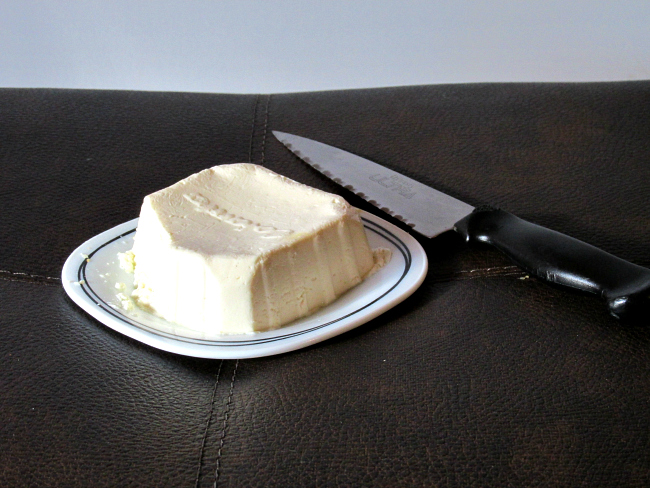
Well, it is in this category that I probably, sadly, part ways with a lot of my audience. Don’t hate me: it’s just my personal opinion. Costeño cheese sometimes gets a bit of flack for being a bit salty; but you know what? At least it registers on the palate. A lot of Colombian cheese has no taste. Nothing whatsoever. This is what honestly baffles me about the whole Cheese Obsession. I could understand it if the majority of the cheeses were delicious, but this is just not the case. Cheese, like the above Campesino, is often described appreciatively as smooth. Personally, I find this description to also just mean bland. Perhaps this is just me coming from a world of cheese that is a front-on assault on the taste buds, but I’m finding it very hard to change this.
What’s your opinion? Is “smooth” just a polite way of saying “boring,” or is Colombian cheese actually amazing, and deserved to be had with everything, even guava paste? I know this is a passionate topic, so please let us know your perspective below!


Stephen Cope on
For those who still love their traditional European cheeses, try the Estana Queseria, between El Retiro and La Ceja in Antioquia. Estana produce world class cheddar, emmental, manchego, azul (blue cheese), camembert, brie, ricotta, feta and parmesan. They have a website at http://www.fincaestana.net and their Facebook address is Estana_Queseria.
Chris on
My friends and I taste tested 18 Colombian cheeses on their own and one cheese we liked—better put, we didn’t think it was “meh”—was queso pera. Any thoughts on it?
German on
Hi Paul,
As a Colombian “Costeño” and cheese lover, I got to accept what you said… either campesino (or even worse, cuajada) are absolutely bland… although when eaten along other cheeses it works fine as addition for volume… something like the lettuce on a salad.
The costeño cheese, as you mention, is relevant since it s also a fresh, not mature cheese, which has some specific soft flavor which along with its saltiness and slightly chewy texture (in fact, the most sponge-like texture ones are called “chui-chui” as a funny onomatopoeia given the sound it does when squeezed repeatedly) beats the campesino at least, but if the Paipa was good to you then you have to try the cheeses done in the region of “los santanderes”, which comprises Santander and Norte de Santander… I have tried a couple, being quesito de hoja and queso reinoso – kind of matured and mildly intense in flavor, quesito de hoja being really creamy and reinoso being more like an aged parmigiano, my absolute favorites
Not sure about the quality of what you can get in Bogota for those cheeses, but if visiting Santander, you need to try them!
Kevin on
I’m a Colombian living in Melbourne. Im a total food lover and what i actually have found is that aussies love campesino cheese as much as they love their bries the difference is here we don’t call it campesino cheese but does it sound familiar to you the good old cottage cheese? Used in different cuisines from fried to raw as well as a spread. Still nothing like getting tipsy and having a mouth watering saganaki with a glass of pinot grigio.
PS I’m still trying to comprehend vegemite and chocolate 🙂
Eduardo on
Hi, I’m from Bogota. Have you tried envueltos?
Edgar on
Hi Paul, I’m a Colombian living in Australia. Cheers, mate! I’ll readily agree with you that we have very little of the “cheese culture” that can be found in the first world (it’s the same with the “coffee culture”, surprisingly). However, I will disagree with you on the blandness of our cheese, especially the Campesino.
Blandness of Colombian food (not only cheese, but things like arepas, tamal and our famous soups) is a complaint I hear frequently from the lips of Australian people. I’ve reached the conclusion that being raised on strong Indian curries, Asian chilli-tastic dishes and super strong, smelly cheeses impede you from noticing and appreciating subtler flavours.
For us, Campesino is a quite salty cheese; combined with its rubbery, firm texture makes it excellent to go with sweet things, providing a nice flavour contrast and overall chewiness. Give it a few more years, and perhaps you’ll start noticing it too.
Paul Giles on
Edgar, mate!!
Good to hear from you over there in my home country – I hope you and yours are safe from the horrible fires that are over there at the moment.
As to the very emotional topic of cheese – thank you for your comments; it’s interesting to learn about the perspectives of Colombians that are abroad. I would say, though, that Colombia does have a very strong cheese culture – it’s just very different to what I’m used to.
And I think that’s the point – and something you’ve astutely raised. The food here is different to what I’m used to. In Australia – the main cities especially – we’re exposed to an absolute barrage of massive flavours, and this is something I’ve become accustomed to, and really like. I think you’re right – I’m not used to the much subtler flavours over here. I’m a bit of a big flavour junky.
Having lived in Korea as well, I know that there’s sometimes a similar expat complaint about the local food there: that it’s *just* extremely spicy, and doesn’t really have any flavour complexity. Koreans will tell you differently – that there is an art in that cuisine of balancing much subtler flavours with the admittedly massive chilli kick of a lot of Korean food, and, after a couple of years, I grew to notice and appreciate that underlying subtlety.
Maybe – and I’m a little dubious here – maybe the same will happen to me in Colombia. However, appreciatively describing a cheese as “rubbery” doesn’t really fill me with too much hope about that. I understand that a big component of the attraction of cheese in, say, hot chocolate, is the added textural component, but, I’m afraid that I’m still not after rubberiness or chewiness in my cheese. Who knows, though: I may well end up liking it! Stranger things have happened…
Mark Gonz on
Hi Paul,
I’m Colombian, but live in the USA and i know the feeling when something just doesn’t taste right or is not what we are used to, take for example here in the USA most people love their Pumpkin pie with marshmallows and wip cream from a metal bottle, most colombians find this grows, since pumpkin is a vegetable for us and we use it for “guisos con calabasa”. I am married to a lady from Denmark of all places and if you taste the cheese from Denmark you will never like any other cheese in the world, its a blessing and a curse. I agree with you that cheese is NOT one of colombia’s best qualities, maybe that is why we tend to mix it with anything else that has flavor, but what i see here is a great business opportunity, wink, wink. Anyway love the article and don’t worry we are not as sensitive as lets say New Yorkers or Texans (you don’t want to say anything bad about them, hahahaha)
Paul Giles on
Hey guys!!
Mark; thank you so much for your comment, as interesting and nicely balanced as a piece of Edam smothered in arequipe. I’m also intrigued that you’re Colombian, but don’t really like the cheese from this country – I feel it’s possible that you’re a minority in that respect. I respect that!! I kind of want to taste Danish cheese, now, though.
How do you find pumpkin pie? It sounds terrible, but, when I tried it, I was surprised to find I like it. Over in Korea, they even have pumpkin candy, and it’s weirdly AMAZING! Thank you for your kind words, and I’ll be careful not to mess with either Texans or New Yorkers!!!
Azzam on
Well, at the risk of offending most of the blog’s readers, I’d have to agree with you Gilesy. ‘Meh’ is probably the exact word I would use to describe the cheese here. Still, it would be unfair on all the other countries if Colombia had amazing cheese as well as all the other perks…