
Being quite the fan of the odd tipple, I`d like to argue that one of the best ways to follow the history of a people is to follow what they drink. Nowhere will this be more evident than in the history of Colombia, and its histories of chicha and beer. Tracking chicha and beer, we also track Colombia`s fascinating history of colonialism, independence, class struggle and geopolitics. So, next time you`re downing a coldie, justify your action by saying you`re just appreciating Colombia`s rich history.
Chicha has been drunk in Colombia for about as long as people have been here. It plays a particularly important role in the Muisca culture, whose home is in Bogota and its surrounds. It took a little while for the newcomers to catch on, but, particularly after independence from Spain in the 19th century, everybody in the capital was going crazy about this fermented corn drink made from spit. Mmmm mmmm… who wouldn`t?
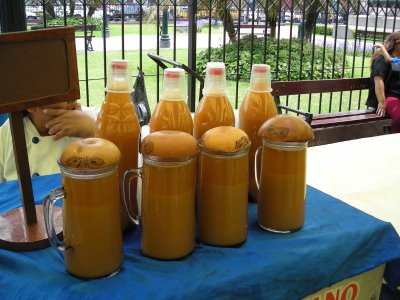
It got to the point that there were more chicha reserves in Bogota than those for water. Being cheap, unregulated, and something of a focal point for the indigenous, poor, and working class (the populist politician Gaitan himself could often be found with a tejo in one hand and a chicha in the other), a few powerful people were getting their noses all out of joint about how popular it was.
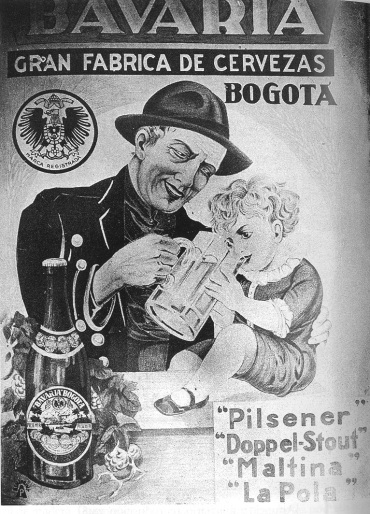
One of these noses belonged to Leo S. Kopp, an immigrant from Germany who is said to have brought the first real example of industrial manufacturing to Colombia by helping open a beer factory in Bogota in 1889. His product was doing alright amongst the upper classes, but he saw some room for dramatic improvement. Getting some help from a new breed of doctors all crazy about hygiene, and some shady figures in government, Kopp and other brewers declared all-out war on chicha and its drinkers.
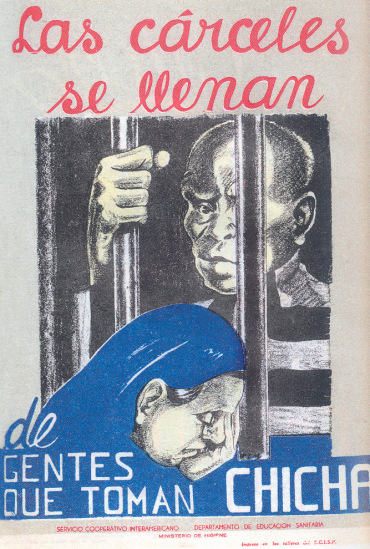
Claiming that drinking chicha wasn`t only unhygienic, but also turned you into an animal and put you in jail, Kopp`s brewery, Bavaria, along with the other fledgling brewers, unleashed a ferocious campaign on their fermented foe. At the time, along with the beer they named after Colombia`s beloved Independence hero (a beer in general is still called a Pola here), Bavaria also had beers called, slightly suggestively you could say, “No More Chicha,” “Consume Beer,” and, my personal favourite, “Hygienica.” Mmmm… Hygiene…
Despite the backing of the doctors and government subsidies, beer could still have lost the war if Gaitan hadn`t been shot in 1948. The death of this wildly popular leader set off a chain of events that led to enormous upheavals and sorrows for the country. It also helped spell the end of Chicha`s reign. A law was passed banning the sale of fermented drinks that weren`t sealed and bottled. In other words, chicha was banned, and, although a number of underground chicherias battled on in defiance, beer slowly took over. Now, beer is comfortable in its position as the number one alcoholic beverage enjoyed in Colombia. Chicha became legal again only in 1991, and, at this time, is quite the rarity. Some, like myself, would say it`s because it tastes awful; but don`t take my word for it. The best place to give it a go is one of the funky little student bars in the Chorro, at the heart of Bogota`s old town, La Candelaria.

There`s so much more about history, beer and chicha I could talk about; including how the Great Depression saw Bavaria eventually own nearly 100% of the Colombian beer market; how World War II and the Panama Canal saw the same Bavaria somehow become owned completely by (non-German) Colombians; or why Bolivar (rather unsuccessfully) banned Chicha “now and forever,” but, I`m afraid, those are booze stories for another time. Buy me a beer, and I might just tell them to you.
Cheers.
Paul G




Pingback: One Year as a See Colombia Travel Blogger. | Colombia Travel Blog by Marcela & See Colombia Travel