The banning of tourists in the Colombian village of Nazareth was touched on by mass media, but I feel the topic begs a few questions that, while difficult to answer, are important to address as tourism (and specifically ecotourism) develops throughout the world.
Colombia is one of the most popular destinations for ecotourism in the world, and little wonder; it’s a country of stunning ecological diversity and one that takes its responsibility to the environment seriously (though there are, it must be said, some exceptions to this). Which is what makes the drastic decision by the inhabitants of Nazareth to ban tourists so alarming: the village and its surrounding areas were hotspots for ecotourism.
For me this is indicative of a growing problem: as ecotourism continues to gain popularity throughout the world the frequency of it being used merely as a buzzword increase. From this many questions arise. Primarily we should ask ourselves, what is ecotourism? Is it tourism with a focus on observing the natural world in ecologically rich destinations? Is it staying in alternative, sustainable accommodation? Or is it any travel in which the traveler themselves keeps an eye firmly on the ecological impact of their travel, and attempts to minimize it?
As ecotourism develops, it has become less about the latter and more about the two former points, allowing many companies and travelers to profit from the term itself as a selling point. Ecotourism can become just another word for a wildlife adventure or a trek and as the name itself conjures images of environmental awareness, travelers often take little heed of what it should mean to be an ecotourist in the first place.
This surge in popularity, of course, comes at a price, and generally it’s the local wildlife and people that end up fronting the bill. Often, since increased tourism can bring a great deal of financial reward to local communities, the damage done is overlooked, but clearly not in Nazareth, where ecotourism in Colombia clearly caused troubles.
The decision was based on two main factors. Firstly, the behavior of the tourists themselves caused discomfort in the community. The overall complaint was that tourists failed to distinguish between the locals and the wildlife they came to observe; the sense that everything in an indigenous town (including the people) is a peculiarity or spectacle can be pervasive amongst travelers and offensive to locals.
The second grievance was that locals actually saw very little in the way of increased income, despite the influx of tourism. Tourists may buy a few trinkets but ultimately their money has been invested in transport or travel agents. For travelers this can be difficult to avoid, since agencies allow ease of travel to difficult-to-reach areas. You can, however, ensure you research your travel agency well, and see that they make an attempt to contribute to the world of ecotourism, rather than merely benefit from it.
I believe that ecotourists should be sensitive to their adopted environments, which means caring for the wildlife and showing understanding to the locals. In many ways being a traveler can be antithetical to being environmentally friendly (consider the environmental costs of flights as an example), but it doesn’t have to be. There’s ways to dramatically reduce your footprint and sometimes even offset it.
Sensitivity when traveling is the name of the game and the understanding that ecotourism is much more than just a buzzword. The rise of ecotourism in Colombia is great and I fully encourage it, but ecotourism isn’t just seeing the majestic wealth of natural resources our world has to offer – it’s an attempt to travel and do what you can to limit your impact on where you go and even, if possible, to help out a little.
If you’re interested in taking an eco-tour in Colombia, be sure to get in touch with See Colombia Travel, who work to create a sustainable tourism model in Colombia, as well as donating a percentage of their fees to Fundacion Rio Urbano.
Paul




Paul on
Well we’re in the right country I suppose! I came across some equally amazing birds at a finca near Armenia. All-singing, all-dancing. Quality.
Stephanie Sadler on
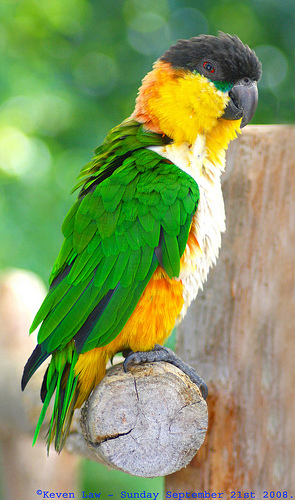
Wow, that bird in the photo is absolutely stunning. I’d love to come across one of those!