


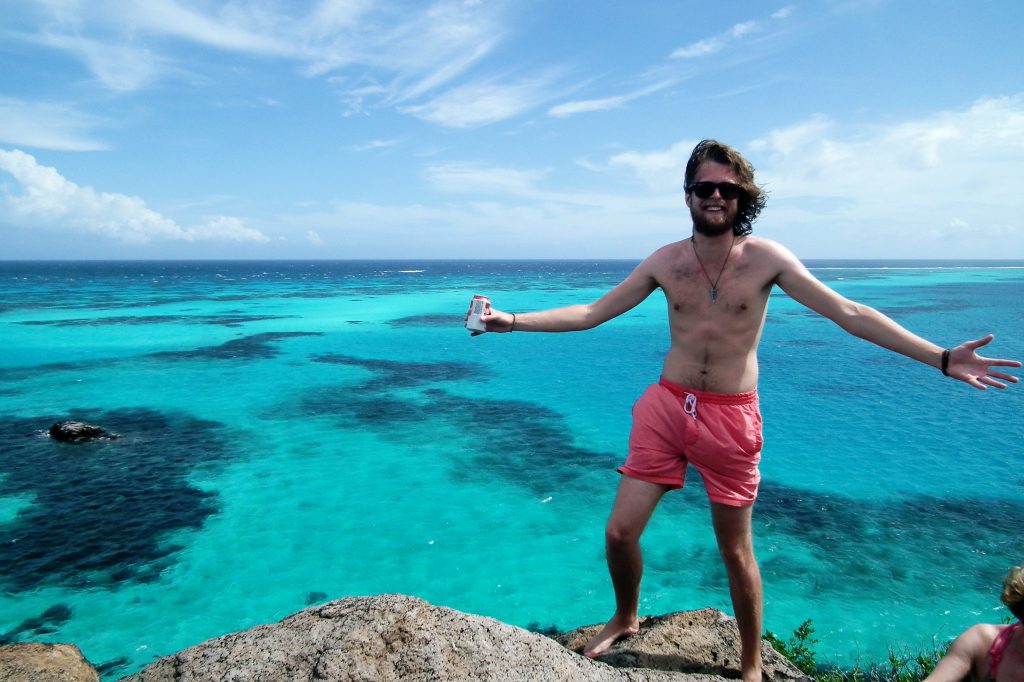
I’ll admit one thing to begin with: Colombia and I, it wasn’t love at first sight. This was mainly because ‘first sight’ was the slightly illicit desert border town of Maicao in La Guajira – I crossed over that border in December 2009 to stock up on pesos to trade for rapidly weakening Bolivares fuertes during the year I lived in Venezuela. My first sight of the country I would come to love and call my home was through a dusty taxi window after a 6 hour border crossing, made worse by the rapidly escalating tensions between the neighbouring countries at the time. I spent 3 nights in Maicao, in a cheap hotel with more dead cockroaches than working lightbulbs – my friend and I ate pizza, milked ATMs dry, and flirted with the two shop-girls at the Levi’s outlet store. On the fourth day I hopped on the back of a mototaxi back to the border, not in love with Colombia, and looking forward to my first South American Christmas in Valencia.


My second sighting of Colombia was of the sprawling mass of Bogota from the window of an Air France jet in 2011. I moved to the capital of Colombia for a year to work for the British Council, as I had in Venezuela a couple of years earlier. Even then my love for Colombia didn’t arrive right away: I had something of a Gabriel Garcia Marquez moment and, like the young novelist many years before, struggled to adjust to the Andean climate and way of life after having been an honorary costeno in Venezuela. However, being the naturally inclined wanderer that I always have been I began to travel around the country, at first during the odd weekend I had off work, then more extensively when my first holidays arrived in December. I visited the cobbled streets of Boyaca pueblos, the Pacific jungles of the Chocó, the snow-capped peaks and glaciers of El Cocuy, the coffee farms of Caldas. I trekked through the coastal jungles to the Lost City and the beaches of Tayrona National Park. I danced my way through Christmas in a chiva in Santa Marta, and saw in the New Year in an open-air salsateca in Barranquilla. I got my Spanish back up to scratch and talked to Colombian people. By the end of the year I had fallen in love with this country. And then I had to leave.


They say that absence makes the heart grow fonder, and it was perhaps in this spirit that my love for Colombia became cemented and inevitable. Back in Manchester studying for my Masters I found myself flicking through photos of my Colombian travels. I remembered the old man in Cocuy who invited me to stay in his house and then introduced me to half the town as “an actor who was in films such as ‘Passion of the Christ’ and ‘Lord of the Rings'” (I had long hair and a huge beard then, and I didn’t contradict him). I recalled the young boy whose job it was to sit in the prow of a small lancha in Nuqui and spot the giant humpback whales spouting in the mist-shrouded distance, and his delighted smile when he accomplished this task. I remembered the solemn intensity of the elderly Wayuu woman who sold me the burnt-orange mochila that my mother still proudly wears to this day, and whose quiet dignity made me resist haggling for the first time ever (I love a good haggle!). As I remembered all these people, all these places, I fell in love all over again. And I found myself missing Colombia; missing a place I wasn’t from but with which I felt a stronger affinity than to my home. And I knew I had to go back: leaving Colombia that first time was like ending a relationship too soon – there were still feelings there that had to be explored, not to mention places.
It’s now April 2016. I have been back here in Colombia for over two years now and have continued to explore throughout its 32 departments, constantly discovering new and exciting places, and continually reaffirming my love for the country. I have dedicated much of my time to studying the history of the country, it’s geography and biodiversity. I don’t just want to see Colombia, I want to try to understand it and know it. I have become one of ‘those people’ who constantly corrects people who spell it ‘Columbia.’ I have been lucky enough to write for this blog for most of my time in Colombia – I have written about 250 blog posts about travelling in this wonderful country. At a rough average of (at least) 1000 words per post, that’s well over 250,000 words. By even the most rigid word-count classifications that’s a couple of novels worth! My photos of Colombia have been seen, shared, and ‘liked’ hundreds of thousands, perhaps millions, of times. I’m proud to be able to do my small bit towards changing perceptions of Colombia and spreading the word about the magic of my adopted homeland. I’m happy to have been able to appear on television and in newspapers sharing my love for Colombia. You don’t see my face all that often on this blog or our social media, but that’s kind of the point – Colombia is the real star here, not me. It’s a country that more than deserves some positive time in the limelight!


There might be people who read this post and find it overly sentimental or sycophantic and that’s OK. Yet if you come to Colombia you’ll find thousands of foreigners who have experienced the same emotions that I’m describing here. If you search the internet or chat with travelers in hostels you’ll find thousands more in the early stages of the same love. There are some places that seem to get under people’s skin more quickly than others. Colombia is one of those places.
It’s not all roses and sunshine (maybe that should be ‘orchids and sunshine’?). There are things I don’t like about Colombia, things that make me sad or angry (there are more than enough of those things in England!). But all of these things come from that same loving place: when you love something you don’t want it to change too much, for fear of losing the things you love about it. But you do want it to grow and develop, and to be happier, safer and more equal. There are things here that make me feel powerless. Travelling can be a mixed blessing in this sense: I see so much beauty and joy in Colombia, and a lot of sadness mingled with this joy. In the deserts of the Alta Guajira the children place ropes across the roads and ask for sweets or cookies as a ‘toll’ for driving across their wild land. At one point I’d run out of these treats and my friend passed a tiny little Wayuu girl a bottle of bubbles. I’ll never forget the little jump of shock then the beaming smile that swept over her face upon blowing her first bubbles. I don’t want her to be hungry or thirsty. The gang of kids who guided me to the hidden jungle waterfalls of San Cipriano were happy and full of life, but I want them to be able to go to school. The Arhuaco people who allowed me to spend time in their home of Nabusimake in the high Sierra Nevada de Santa Marta live in the ‘heart of the world’ and they want to see the incredible biodiversity of their home protected: I truly hope that it is. The people of Colombia have welcomed me to their country with such open arms that it can be hard to see certain injustices when I travel around it. Colombia is a country that has suffered tremendous hurt and still carries the scars, but I still have so much faith in the ability of Colombians, the most resourceful people I have ever met, to fix the things that are wrong here.

On those rare occasions when I find myself flirting with the idea of moving away it never lasts too long. I just go and sit in a tienda with a cold Poker and listen to vallenato on an antique jukebox with some friends. I go down to Paloquemao market for a caldo at a small restaurant where the owner calls me ‘primo’ and greets me without fail with a big bear hug and a high-five. I go to a club somewhere and listen to cumbia, champeta, bullerengue, or salsa. Or I travel: just jump on a bus and go. Either to hike in a forest and look for birds, or to wander the streets of some small town and chat with the people who live there. I just came back from a trip to the Rio Samana in Antioquia and on the way back from the river we stopped in a tiny town named El Prodigio for homemade patacones and hogao. I could hardly bring myself to leave this town: it contained nothing especially noteworthy, but it just had that atmosphere that is so particular to little Colombian towns. One day I plan to travel throughout Colombia just stopping at every little town along the way, sitting in the plazas and listening to people tell their stories. But I digress: what I’m really trying to say is that whenever I even consider leaving Colombia I simply have to remind myself of why I love the place so much, and those feelings disappear almost instantly. Colombia is so easy to fall in love with that it’s never much of a struggle to find those reminders.

People often ask me whether I worry about writing this blog about the magic of Colombia. Will it still be the same place I love so much if more and more people come and visit? Will that magic be lost somehow? I always tell them the same thing: it’s like having a partner or a new best friend and wanting to introduce them to your friends and family. You want them to see and understand what it is you love about that person. I feel the same way about Colombia. I love this country and I want other people to come and see it, and experience those same feelings. And who knows, maybe fall in love as well.
Chris


