A short time ago I visited San Agustin’s Archaeological Park thanks to the San Agustin town council and Disfruta San Agustin. Over the course of three very intense days, myself and Toya, from Colombia de Una really came to appreciate the potential for tourism that the region has. We already have a number of posts ready in our archives for the next month or so in which we talk about this spectacular part of Colombia. However, today I want to talk less from the point of view of a traveller and more from that of a tourist industry professional about a topic that really caught my attention.
Throughout the whole trip, whilst talking to the authorities, with people involved in local tourism and even during an interview we gave on the radio, people constantly insisted that Machu Picchu should be used as the benchmark for what San Agustin aspires to be. So deep-rooted is this idea that this video about San Agustin is basically a frame-by-frame replica of a “Peru: Empire of Hidden Treasures” campaign (if you play them at the same time you will undoubtedly notice the outrageous similarity between the two).

Aside from the fact that the story acts as an example of “outside inspiration” and that the video makers copied the same attributes of two very distinct destinations, I think it is important to point out the many differences between both of these tourist offerings. If San Agustin is indeed looking for a reference point upon which to base its strategy for increasing tourism to a Latin American region that undoubtedly deserves it, it should look even further south, specifically to Easter Island.
I speak about this knowingly and with a certain degree of authority: I am a communications expert for the tourist industry and I was an entrepreneur in Latin America for nearly eight years before coming to Colombia to embark on this See Colombia Travel adventure. During that time, I travelled around the continent, getting familiar with the ins and outs of the industry from within and I am always keen to be up-to-date with communication strategies in various countries. I’ve lost count of how many times I have visited Machu Picchu, both for business and pleasure, and while I have only been to Easter Island once, I have also commercialised it as a product and I know the dynamics of the industry there.
The fundamental difference between Machu Picchu and San Agustin, and one which gives rise to all the others, is that Machu Picchu has been a distinctive icon for Peru for many decades already, not only internationally but also within the country. It cannot be denied that it is the image which ignites the most pride in Peruvians, with the Nazca lines coming a distant second.

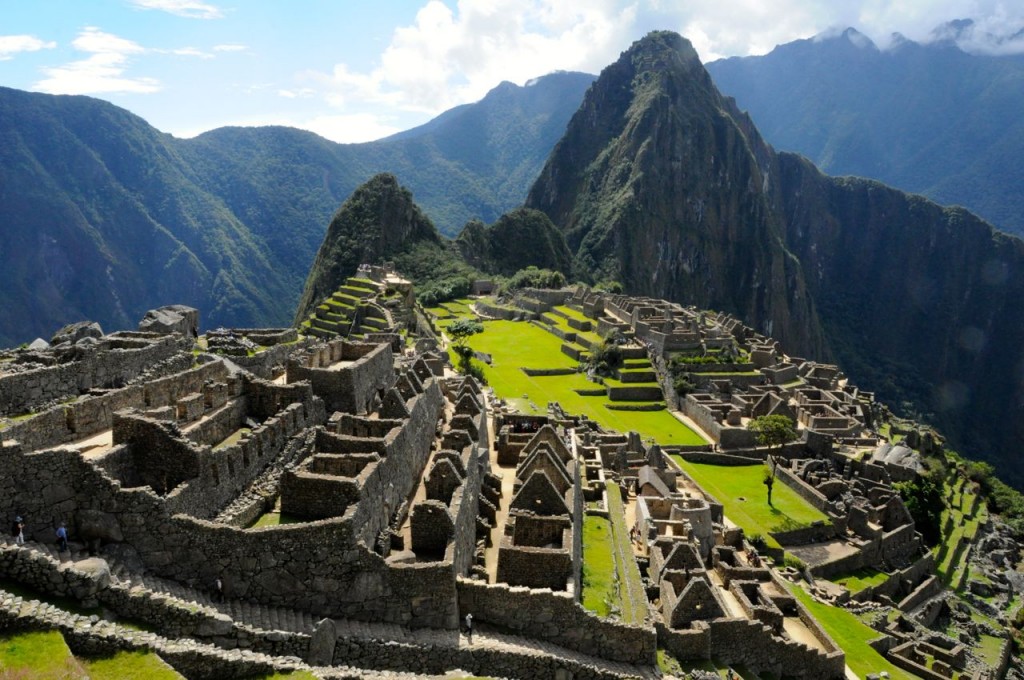
Colombia, on the other hand, lacks a national icon which identifies it – both outside the country and within – and San Agustin is a long way off becoming Colombia’s symbol. Therefore, the first great challenge faced by San Agustin is to position itself nationally as the main archaeological destination in Colombia alongside – or above and beyond – the Lost City, which resembles Machu Picchu much more closely. Only then can it aim this strategy to the wider world.
The second task is to look at how well-prepared it is and how to sell it as a tourist destination, imagining that it were at the same stage of development as Machu Picchu.
Before arriving at Machu Picchu there are two obligatory stops that need to be made: the city of Cusco and the village of Aguas Calientes. Cusco is an attraction in its own right, with numerous sporting, cultural, archaeological and artistic activities in and around the city. One could quite easily visit Cusco without going to Machu Picchu and still have an incredible experience.
Aguas Calientes is the necessary stop if arriving by train to Machu Picchu. You have to stop over in the village in order to catch the 15 minute bus to the site. It is an “artificial” village which grew inorganically and which has its entire economy based on Machu Picchu. There are several restaurants and an impressive variety of hotels, ranging from hostels to the luxurious Inkaterra and, despite efforts to regulate the village, it continues to be a disorganised and confusing stopover for independent travellers.


In both cases, but especially in that of Cusco, there are dozens of different routes that can be taken in order to reach Machu Picchu as a final destination (the sacred valley, Ollantaytambo, Sacsayhuaman etc.).
The San Agustin Archaeological Park only has the town of San Agustin as an obligatory stopover and the town now faces two challenges: the first is coming up with activities that make it worthwhile staying in the region for more than two days. The second is ensuring that it doesn’t turn into a new Aguas Calientes in terms of over-exploitation of the tourist offering. This all points to a long process which should begin with training the townsfolk and local tourism providers in order to create a consensus about how to handle foreign tourism.
There is a third challenge too: how to sell the story surrounding the Archaeological Park. Machu Picchu is one of the modern wonders of the world, the history of the Incas has been extremely well-documented, there are films, documentaries, books and comics (Tintin in the Temple of the Sun) that have almost turned this place into a myth. It is one of the main, most-studied pre-Hispanic cultures.
The culture of San Agustin, on the other hand, is enveloped in total mystery, it isn’t internationally recognised (yet) and therefore the angle in terms of historic marketing needs to be totally different.
And why Easter Island?


I have no doubt that, before looking to the outside world, we must first analyse the context and the specific situation of a destination. However, if we are to look for a similar reference point, I believe that Easter Island is more closely related. Here are just some similarities:
- For a long time, and for different reasons, Chile and Colombia kept these places under the radar as a tourist offering and are now attempting to revive them.
- Access to both is difficult (for Easter Island much more so, but now the Chilean government has integrated it with continental Chile in a very intuitive way) and therefore they require an extra bit of effort if they are to be visited.
- Easter Island has been able to, thanks largely to frequent flights to the island, develop a varied hotel offering, including some five-star wonders. San Agustin should certainly aspire to emulate this
- Both cultures are shrouded in mystery, we know very little about them and Easter Island successfully sells this angle
- They are places that could easily become iconic thanks to the striking visual aspect of their main attractions
- The most obvious one: both cultures have stone structures as the basis for their attractiveness to tourists, something which could prove irresistible to travellers interested in archaeology.
These may appear to be very basic observations, but I think they are fundamental enough for us to be able to identify these destinations with each other and to take a look at Chile’s experience with Easter Island, rather than just looking towards our neighbour Peru as inspiration for destination-specific marketing strategies.
JL
Related Posts