Like many other big cities, here in Bogota the traffic can become a bit of a nightmare, so locals breathed a collective sigh of relief when, in 2000, the TransMilenio system was opened to the public. The TransMilenio system is similar in concept to an underground metro system – only it’s actually a series of buses that drive overground. The buses are separated from the other traffic in the city with their own lanes, and they each follow a designated path with stops only at specified stations, meaning the buses run relatively promptly and without much complication.

The TransMilenio system may not have improved the traffic conditions significantly, but it has meant that locals from various different areas of the city are better connected for work. For anyone on a Bogota tour, it’s a relatively simple way to get around the city.
Recently there has been a lot of controversy surrounding the TransMilenio since developments to the system have been delayed and halted due to various reasons – the most infamous and unfortunate of these being a large-scale public scandal wherein former mayor Samuel Moreno was incarcerated.
The TransMilenio can also get very busy, especially at peak hours, and can be difficult to use thanks to various logistical problems (small doors, people not letting others off, overcrowding), but if these hours are avoided it`s a fine and helpful system of transportation.
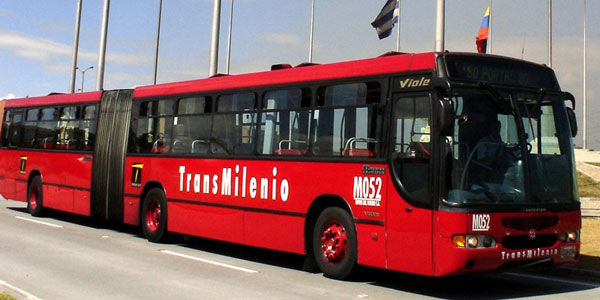
But enough of all that. Everyone needs to use public transport at some point, so here`s the how-to guide:
To use the buses, you pay upon entrance to the station ($1700 COL) and are given a card with the requested amount of journeys on it. If you’ve only bought one ticket, you have to slot the card into the turnstile; otherwise you simply press the card on the lit-up panel.
Once through you’ll see a series of doorways, each with different buses assigned to them. In the middle of most stations you’ll find a board with all the stations on it, and if you know which one you want to go to you can find the relevant bus if the station you want has been indicated with a black dot. The maps look like this:

Different buses have different routes and final destinations, indicated by the colour of the line. This helps you locate quicker which bus you need. You then locate the bus you need by checking the number of the bus and the corresponding door (you’ll find a diagram on the board, or you can just wander down and follow the signs).
Sound confusing? It is a little bit, but you quickly get use to it.
Now all that`s left for you to do is fight the general public for a place on the bus. Good, clean fun.
Ryan